
What is
Pongal/Sankranti Puja?
A harvest festival puja honoring the Sun God and celebrating agricultural abundance.
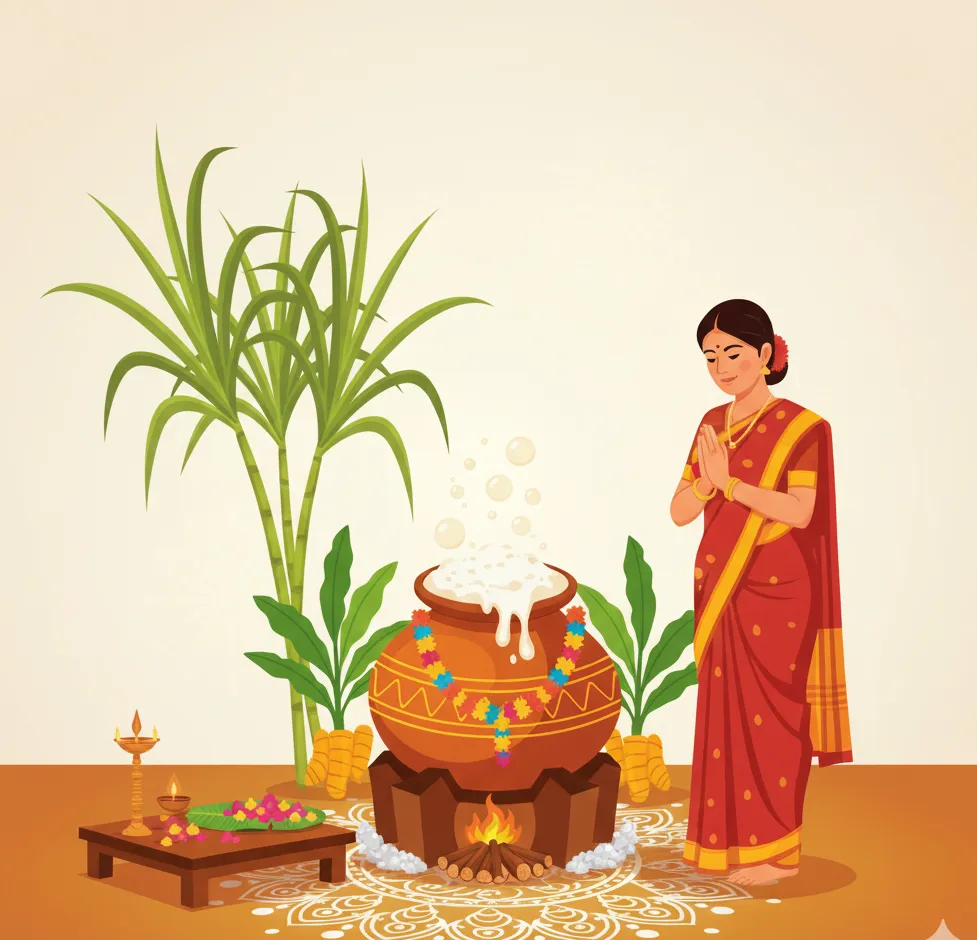
About Pongal/Sankranti Puja
When to Perform
Pongal/Sankranti is celebrated on January 14-15 every year when the sun enters Capricorn. The main puja is performed in the morning during sunrise, with the traditional pongal rice being cooked outdoors.
Significance
- Celebrates the harvest season and gratitude to the Sun God
- Marks the auspicious beginning of Uttarayana
- Brings prosperity and thanksgiving for agricultural abundance
- Strengthens family and community bonds
Basic Steps
- The ceremony lasts 1.5-2 hours and includes:
- • Surya Puja (Sun worship)
- • Fresh harvest rice boiling ceremony
- • "Pongalo Pongal" celebration
- • Sugarcane and turmeric plant offering
- • Cattle/vehicle decoration and worship
- • Family prosperity prayers
- • Sweet Pongal prasad distribution
Common Questions
Can we do this in apartments without outdoor space?
Yes! While traditional pongal is cooked outdoors, we can adapt the ceremony for indoor kitchens with symbolic outdoor elements.
Is cattle worship mandatory?
While traditional, it's optional. Urban families often worship vehicles instead as modern equivalents of cattle (means of livelihood).
What happens to the boiled-over pongal?
The overflow is considered highly auspicious! The more it overflows while shouting 'Pongalo Pongal', the more prosperity you'll receive.
Can non-agricultural families celebrate?
Absolutely! It's now a universal prosperity festival. Everyone can give thanks for abundance and seek blessings for new beginnings.
What should I arrange for the ceremony?
Common puja items like flowers, fruits, and incense are typically used. Most items are easily available at local stores. The ceremony setup is kept simple and manageable.
Ready to book Pongal/Sankranti Puja?
Find a verified pandit and an auspicious date for your ceremony.
View Pongal/Sankranti Puja details